



The workshop enabled enterprises, including MSMEs, to better understand and operationalise responsible business practices in line with evolving market expectations
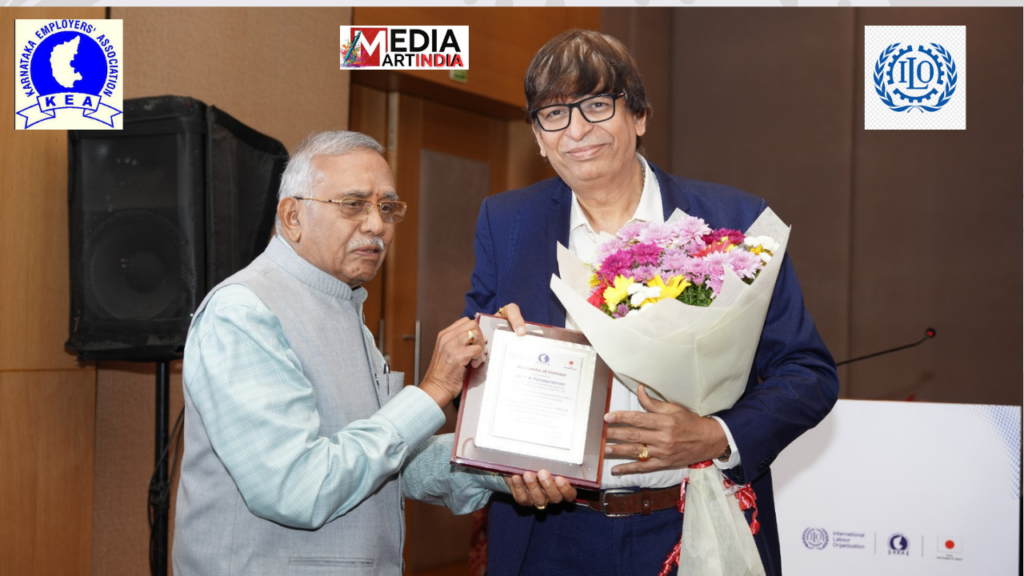
As global supply chains face increasing scrutiny around labour practices, the Karnataka Employers’ Association (KEA), in collaboration with the International Labour Organization (ILO), with the support of the Government of Japan, organized a two-day capacity-building workshop on responsible business conduct (RBC) and international labour standards (ILS) for manufacturing enterprises on 2–3 February 2026 in Bengaluru.
The workshop was inaugurated by Shri BC Prabhakar, India’s leading legal luminary on industrial relations and Chairman of BCP Associate and President of KEA. It brought together 65 leaders from the manufacturing industry, ranging from large to small and medium-sized enterprises (SMEs), to strengthen their understanding and operationalization of responsible business practices aligned with international labour standards and evolving market expectations.
One of the key highlights of the sessions was given by Mr. T. R. Parasuraman, Past President and Wholetime Director, Toyota Industries Engine India Pvt. Ltd., who emphasised that India’s strong demographic position places greater responsibility on the industry to pursue ethical and inclusive growth. He noted that manufacturing today must balance efficiency with social responsibility and compliance, with Responsible Business Conduct and International Labour Standards becoming increasingly important. He also highlighted that ESG is now a business necessity and underscored the role of leadership, people-centric practices and collaboration in building a “Sustainable and Responsible India”.

Mr. Kamal Bali, President and Managing Director, Volvo Group India, said, “As India moves towards the vision of Viksit Bharat @100, the focus must be on a strong and resilient economy, transparency, equity, and quality delivery. Indian manufacturing needs to respond to global shifts with foresight, where resilience and responsibility matter as much as scale and efficiency. Our experience shows that progress on resources and people must go hand in hand. Collaboration across industry, government and society, supported by strong values and inclusive leadership, will be key to building future-ready and responsible manufacturing ecosystems”.
The programme highlighted Responsible Business Conduct, with a particular focus on the Fundamental Principles and Rights at Work (FPRW), including freedom of association, elimination of forced and child labour, non-discrimination, and ensuring a safe and healthy working environment. Through practical sessions, case discussions, and peer learning, participants explored how to identify, manage, and monitor labour-related risks across operations and supply chains as part of responsible business conduct and human rights due diligence frameworks.
The workshop comes at a time when global buyers, investors, and regulators are placing greater emphasis on labour standards and sustainability disclosures. For Indian manufacturers (particularly MSMEs), this shift presents both challenges and opportunities as compliance increasingly influences market access, export competitiveness, and investor confidence. One of the key messages of the workshop was the importance on going beyond the compliance and strategically making an alignment with international standards on RBC, which will benefit not only companies, but also workers, society and the India’s economy.
In the Indian context, frameworks such as the National Guidelines on Responsible Business Conduct (NGRBC) and Business Responsibility and Sustainability Reporting (BRSR/BRSR Core) have further underscored the importance of responsible business practices. However, many enterprises continue to seek clarity and capacity-building support to effectively implement these requirements on the ground.
Dr. G Manjunath, Additional Labour Commissioner (Industrial Relations), Government of Karnataka said, “Strong institutions, skilled people, and responsive regulations are essential for businesses to connect with global markets in a responsible way. We must also ask if our human resource systems and due diligence frameworks are moving quickly enough, and whether our workforce is truly ready for the future. Rising inequality and gaps in labour protection across Asia are serious concerns that can affect long-term stability. A clear national action plan on human rights due diligence, aligned with global labour standards, is vital. Compliance should be seen as a driver of sustainable growth, not just a requirement.” Karnataka’s position as one of India’s leading manufacturing, innovation, and investment hubs makes it a natural setting for such initiatives. Through collaborative efforts like this workshop, KEA and ILO aim to support enterprises in strengthening compliance, aligning with international standards on RBC, and building responsible supply chains that meet both domestic and global expectations.