



Launched in 2021, Project Samposhan was envisioned to address one of the most critical and chronic public health problems – anaemia. Over the past five years, the project has successfully reached more than 1,30,000 beneficiaries across three districts of Uttar Pradesh and seen measurable improvements in the haemoglobin levels of young girls and women.
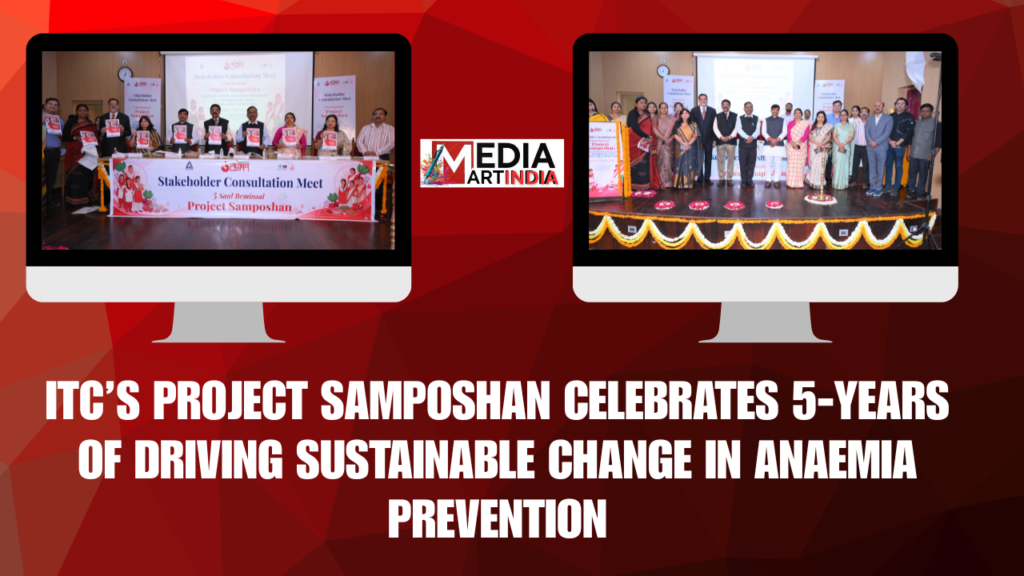
ITC Ltd., in partnership with the Institute for Global Development (IGD), marked the 5th anniversary of Project Samposhan, an initiative under ITC’s Social Investment Programme by conducting a Stakeholders Consultation Meet on Anaemia. This marks five years of sustained multi-stakeholder efforts to improve the nutritional status of women and adolescent girls by empowering them with knowledge and skills to adopt healthier diets and prevent anaemia. The whole transformational journey was based on evidence-based, integrated, inclusive, and participatory interventions.
Launched in 2021, Project Samposhan was envisioned to address one of the most critical and chronic public health problems – anaemia. Over the past five years, the project has successfully reached more than 1,30,000 beneficiaries across three districts of Uttar Pradesh and seen measurable improvements in the haemoglobin levels of young girls and women. The project has also significantly enhanced knowledge, enabled behavioural change, and inspired healthy practices related to the prevention and control of anaemia.

The 5-year milestone celebration was organized on 17th Feb, 2026 at K. N. Udupa Auditorium, Institute of Medical Sciences, Banaras Hindu University, Varanasi. The event brought together key stakeholders including government officials, academic institutions, development partners, community representatives, frontline workers, youth leaders, and media. It provided a platform to reflect on the project’s journey, showcase field-level success stories, and discuss pathways for future scale-up and long–term sustainability.
Speaking on the occasion, Director, Institute of Medical Sciences, BHU, appreciated the impact of Project Samposhan and its alignment with the goals of the Government of India as well, saying, “Over the past decade, the Government of India has made transformative efforts to make India anaemia-free through initiatives such as T3 screening camps, building public awareness through engaging information and education materials, and by dedicating significant funds under the Anaemia Mukt Bharat program”
A major highlight of the celebration was the showcasing of impactful stories, where beneficiaries shared first-hand experiences of how Project Samposhan transformed their lives. The Dean, IMS, BHU, also shed light on the institute’s role in ensuring early diagnosis and timely treatment of anaemia, both at the hospital and across peripheral community centres. Prof. Dr. Ravi Shankar and Hari Shankar collectively praised the Project as a strong example of what long-term, community-centred partnerships can achieve. Over the last five years, the project has not only delivered large-scale outcomes but has also strengthened local ecosystems and empowered communities to take ownership of change. The event also featured interesting and valuable sessions by Dr. Raghu (Director, NIN) and Dr. Seema Puri (Ex-Prof. IHME), acknowledging the collective efforts of all those who contributed to the project’s success over the years.
Mr. Anuj Rustagi, Chief Executive Staples (Aashirvaad), ITC Ltd, said, “Iron deficiency is one of the leading causes of anaemia, impacting a large section of young children and women of reproductive age. Through Project Samposhan, over the past 5 years, we have undertaken a systematic multi-stakeholder approach to address iron deficiency-led anaemia in target communities. The large-scale community impact of the initiative has been possible due to effective partnerships with like-minded organisations like IGD as well as technical expertise of our valuable knowledge partners like the Institute of Medical Sciences, BHU.” Project Samposhan also assessed the efficacy of double-fortified salt (Iron-fortified iodised salt) which provides about 25% of average daily iron requirement, in managing anaemia primarily by increasing iron and Hb levels in young women. “We have seen proven benefits of regular consumption of Iron-fortified salt among communities during the project. We also learned about solving the technical challenges linked to manufacturing and consumer acceptance of Iron-fortified iodised salt. Along with our partners, we will continue to learn and improve all aspects of this programme to contribute meaningfully to an Anaemia Mukt Bharat”, said Mr. Rustagi.
As Project Samposhan steps into its next phase, ITC, in partnership with IGD, reaffirmed its commitment to deepening impact, scaling best practices, and strengthening partnerships to ensure long-term and sustainable change.
Project Samposhan has been implemented in close collaboration with the Department of Community Medicine, IMS, BHU, aligning with national priorities and scientific evidence-based interventions. The project continues to evolve by integrating innovative social behaviour change tools, digital tools, research, and community feedback into its design and delivery.