



The Good Rice Alliance partners with over 13,000 smallholder farmers across 35,000 hectares in India to reduce methane emissions
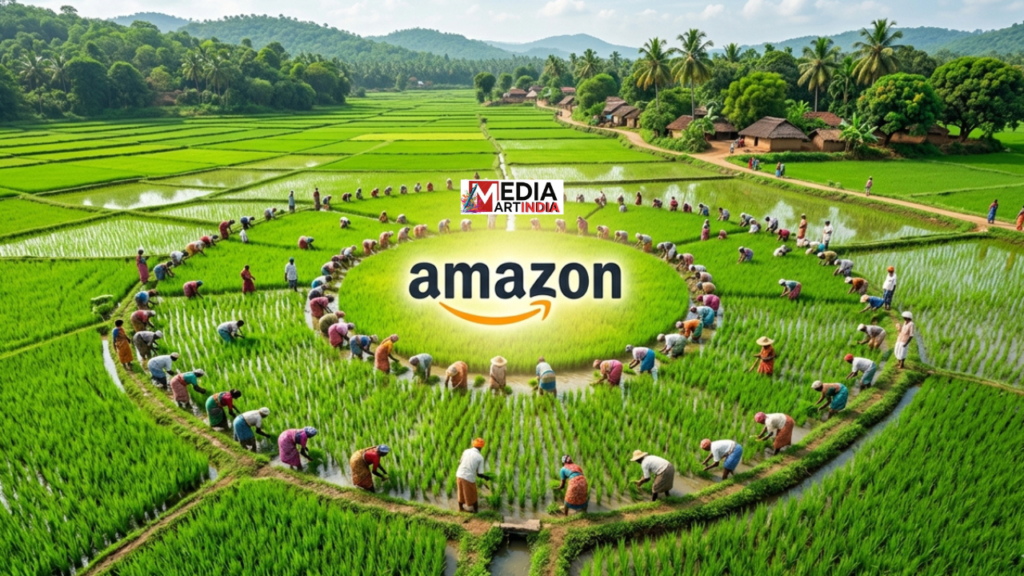
The Good Rice Alliance (TGRA) today announced that it has entered into a long‑term offtake agreement with Amazon, for carbon credits that support the delivery of high‑integrity methane emission reductions from rice cultivation across India. Conventional rice cultivation, which involves the continuous flooding of paddy fields, accounts for 8-10% of global methane emissions, making it the second largest source of agricultural methane emissions globally, behind livestock. Geographically, India is the third largest global methane emitter with the largest area of rice cultivation in the world, which supports over 100 million livelihoods.
Amazon is collaborating with TGRA as the primary buyer for the project, with its commitment covering more than 685,000 metric tons of CO2 equivalent carbon credits during the initial crediting phase. This role highlights Amazon’s dedication to advancing scalable solutions for climate impact and illustrates the substantial reach of TGRA’s initiative.

The agreement supports TGRA’s large‑scale program working with smallholder rice farmers to reduce methane emissions through the adoption of improved water‑management practices, including Alternate Wetting and Drying (AWD) and Direct Seeded Rice (DSR). Methane is a super pollutant with a global warming potential over 27 times that of carbon dioxide, making near‑term reductions critical for slowing climate change this decade.
TGRA operates across multiple Indian states and partners directly with more than 13,000 smallholder farmers, covering over 35,000 hectares of farmland, and provides agronomic training, field‑level support, and financial incentives to enable durable practice change. The program is designed to deliver measurable climate impact while strengthening farmer livelihoods through improved yields, reduced input costs, and increased resilience to climate stress.
“This agreement with Amazon reflects growing demand for rigorously measured high‑integrity methane mitigation credits. Our focus is on delivering real, verifiable climate outcomes while ensuring that smallholder farmers are at the center of the value created.” said Suhas Joshi, Director of the Board, TGRA & Carbon Initiative Lead, Bayer South Asia.
TGRA places a strong emphasis on science‑led measurement, reporting, and verification (MRV) framework, enabling third‑party verified, high‑integrity carbon credits and material methane reductions at scale. Emission reductions are quantified using direct, field‑based methane measurements, conducted in collaboration with the International Rice Research Institute (IRRI), and complemented by digital monitoring tools and third‑party verification under Verra’s Verified Carbon Standard (VCS) using the VM0051 methodology for improved rice management. Building on this measurement‑first foundation, TGRA is also working toward the future use of a biogeochemical model for emissions quantification, subject to ongoing calibration and validation work, which is expected to further strengthen the scientific rigor and scalability of the program over time.
“Methane is a super pollutant that demands our attention now, and agriculture represents a critical opportunity to reduce emissions,” said Michelle Jolly, Director of Sustainability Solutions and Services at Amazon. “This agreement demonstrates our commitment to high-quality carbon credits—supported by auditable field measurements and documentation of practice change, independent validation by remote sensing, and biogeochemical modeling—demonstrating real climate impact. We’re supporting a program that delivers measurable emissions reductions at scale while helping thousands of farmers build more water-efficient operations. It’s the kind of practical solution that moves us from ambition to real impact.”
Successful adoption of improved practices is enabled through intensive on‑the‑ground engagement. TGRA supports 100% of participating farmers through in‑person field officer visits several times per growing season, providing hands‑on guidance and geo-tagged, timestamped photo documentation of improved practice implementation. Field-level data is cross-validated against independent satellite-based soil moisture and water management records, ensuring that the audit trail for each credit is grounded in multiple, independent lines of evidence — not field reporting alone. This layered approach to data quality is central to TGRA’s high-integrity design.
TGRA’s improved irrigation practices not only reduce methane emissions, but also materially lower irrigation water use—typically by up to 30%. While many rice‑based climate projects reference water benefits using proxies or modeled estimates, TGRA applies a measurement‑first approach. This enables defensible water‑stewardship outcomes alongside high‑integrity methane reductions.
“Methane reductions in rice cultivation represent one of the most immediate opportunities to slow near‑term global warming and partnerships with companies like Amazon enable us to scale proven and science-based solutions, while delivering positive climate impact along with tangible benefits to farmers” added Suhas Joshi.
TGRA, a company owned by Bayer, builds on a multi‑year feasibility study and pilot program undertaken by Bayer, GenZero, and Shell Nature-Based Solutions, which established the technical, scientific, and operational foundations for large‑scale rice methane mitigation. GenZero’s and Shell’s participation in the long-term program remain subject to applicable regulatory approvals.
In addition, TGRA has received an ex‑ante A rating from BeZero Carbon, making it the highest‑rated rice project on BeZero’s platform, and reflecting an independent assessment of the program’s design and high integrity. TGRA intends to pursue additional integrity labels and certifications as they become available.