



The Coca-Cola India Foundation, in collaboration with Healing Himalayas and with support from the District Administration of Rudraprayag and the Urban Development Department of Uttarakhand, has operationalized a Material Recovery Facility (MRF) in Kedarnath, bringing structured waste management to one of India’s most ecologically sensitive high-footfall destinations.
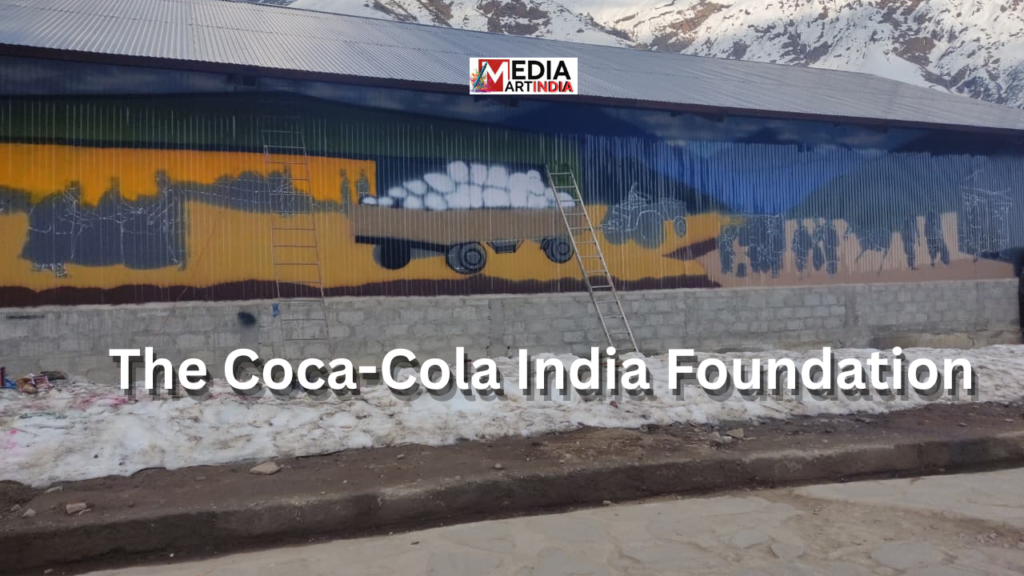
Established under the Himalayan Harmony Project, the facility marks a milestone as one of the few MRFs constructed at such a high altitude, offering a scalable model for waste management across tourism-driven and environmentally fragile regions. Kedarnath has long faced challenges of waste accumulation, limited segregation, and logistical constraints due to its terrain. Addressing this required not just infrastructure, but a systems-led approach. The project was built through extensive stakeholder consultations, baseline assessments, and digital mapping of over 400 waste collection sources across the region, laying the foundation for a more organised and efficient waste management ecosystem. Spread across 3,000 square feet, the MRF has a processing capacity of three tonnes per day and a storage capacity of up to 50 tonnes. It serves as a central hub for waste collection, segregation, and processing.

Beyond infrastructure, the initiative drives behaviour change and community participation through door-to-door awareness, engagement with local businesses, and training of waste workers to strengthen source segregation practices and improve operational efficiency. Speaking about the initiative, a representative from the District Administration, Rudraprayag, said, “The operationalization of this MRF marks a turning point in how we manage waste in the upper Himalayan belt. It brings structure, dignity, and opportunity to a space that has long depended on manual efforts. Beyond improving waste systems, this project creates livelihood opportunities for local waste workers and transporters, offering training in waste handling, logistics, and digital monitoring.”
Shri Vinod Goswami, Director – Urban Development Department, Uttarakhand, said, “Kedarnath’s MRF is a model for structured waste management. It demonstrates how technology and public-private collaboration can converge to protect fragile ecosystems. By reducing open dumping, the MRF redefines what responsible tourism can look like in Uttarakhand. We see strong potential for replicating this model across other high-footfall tourist destinations.” Devyani Rajya Laxmi Rana, Vice President, Public Affairs, Communications and Sustainability, Coca-Cola India and Southwest Asia, said, “Kedarnath’s MRF reflects how infrastructure, partnerships, and community participation can come together to address environmental challenges in fragile ecosystems. By enabling responsible collection, segregation, and processing of plastic waste through our recycling partners, the initiative aims to create a cleaner and more resilient ecosystem for local communities and visitors alike. More importantly, it is a collective step towards bringing ‘Mera Kedar, Swachh Kedar’ to life, in line with the Prime Minister’s Swachh Bharat mission.”
For Pradeep Sangwan, Founder of Healing Himalayas Foundation, this collaboration represents the culmination of years of effort to bring structured waste management to the mountains. “To address the growing waste challenge in fragile mountain ecosystems, we began working towards establishing MRF centres in high-altitude regions with the support of local communities and administrations. Setting up a facility at this elevation came with its own set of logistical and climatic challenges, but with the support of Anandana, The Coca-Cola India Foundation, we have been able to turn the vision of ‘Mera Kedar, Swachh Kedar’ into reality. The Kedarnath MRF stands as proof that such infrastructure can thrive even in the toughest terrains when purpose and partnership come together.”
The facility is equipped with on-site staff accommodation, utilities, and essential machinery including a hydraulic baling unit and weighing equipment. By enabling the compression of dry waste, the MRF significantly improves reverse logistics efficiency, allowing larger volumes of waste to be transported from the high-altitude region to the foothills, addressing one of the most critical challenges in mountain waste management. A digital dashboard further enables real-time tracking of waste movement, ensuring transparency and data-driven operations.
As the Char Dham Yatra gains momentum, the Kedarnath MRF stands as a timely and scalable intervention, demonstrating how infrastructure and community participation can intersect to protect India’s most sacred and fragile geographies.