




Delhi International Airport Limited (DIAL), the operator of Indira Gandhi International Airport, has achieved a 97% reduction in its Scope 1 and 2 greenhouse gas emissions from FY2020 to FY2025. This accomplishment is a direct result of DIAL’s complete transition to renewable energy, marking a milestone in airport decarbonization.
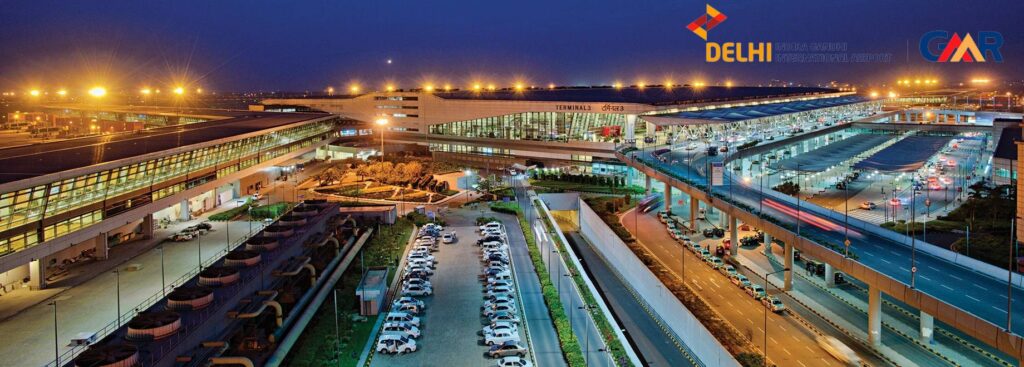
Since FY2022, 100% of DIAL’s net electricity consumption has been sourced from a 7.84 MW on-site solar photovoltaic plant and long-term off-site hydropower procurement. This transition enabled DIAL to achieve net-zero status for Scope 1 and 2 emissions well ahead of its 2030 target, offsetting any residual emissions through verified carbon removals. These achievements position DIAL as a leader among Indian airport operators and led ICRA ESG to assign DIAL an ESG Combined Rating of 77, which is “Strong,” with an environmental score of 83, which is “Exceptional.” The airport’s renewable energy transition is backed by an ISO 50001:2018-certified energy management system and an Integrated Building Management System that enables real-time monitoring and optimization of HVAC, lighting and electromechanical systems. Between FY2021 and FY2024, DIAL implemented multiple energy-saving projects that together delivered savings of 4.67 million kWh, even as overall energy consumption rose due to higher passenger footfalls and capacity expansion. ICRA ESG highlights this combination of green power and efficiency as central to DIAL’s decarbonization profile and its leadership position among large infrastructure assets.

Beyond energy and emissions, DIAL’s efforts on clean operations have helped reduce air emission intensity by 38% between FY2023 and FY2025 through measures such as deploying taxibots, developing the Eastern Cross Taxiway and gradually shifting to electric vehicles. ICRA ESG notes that while Scope 3 emissions remain a high-impact area given the nature of airport operations, DIAL has been measuring and reporting these since FY2016 and has articulated a long-term target of net-zero Scope 3 emissions by 2050. The agency adds that DIAL’s ability to sustain its net-zero Scope 1 and 2 status amid ongoing expansion, alongside deeper value chain engagement and climate risk integration, will be critical watchpoints as the company advances its decarbonisation journey. The airport’s net-zero journey is complemented by a closed-loop water and waste management system. DIAL has demonstrated performance in these areas, operating a system with 100% wastewater recycling, a declining water consumption profile, and recently achieved water-positive status. Its waste recovery rate stands at 98%, with less than 1% sent to landfill. The terminals have also received the Indian Green Building Council’s Net Zero Waste to Landfill Platinum certification. DIAL’s social initiatives have a “Strong” score of 78. The airport maintains a sound employee safety record, offers comprehensive welfare and learning programs, and has implemented inclusive infrastructure for people with reduced mobility and expectant mothers. Its CSR spending, while voluntary, supports programs in education, healthcare, skill development, and women’s empowerment, benefiting over 100,000 individuals across six communities near the airport. Governance practices at DIAL are robust, with ESG oversight embedded at the board level and regular reporting to stakeholders. The company’s disclosures are aligned with international frameworks such as the Global Reporting Initiative (GRI), United Nations Sustainable Development Goals (UN SDGs), and ICAO environmental objectives. ICRA ESG highlighted DIAL’s structured approach to sustainability, noting its alignment with global standards, third-party assurance, and ongoing efforts to strengthen value chain sustainability. While areas like supplier ESG monitoring, climate risk integration, and gender diversity offer further growth opportunities, DIAL’s ESG journey continues to set a benchmark for the aviation sector in India.
About Delhi International Airport Limited
Delhi International Airport Limited is a special purpose vehicle formed under a public-private partnership (PPP) model between GMR Airports Infrastructure Limited (holding company of GMR Group), Airports Authority of India, and other stakeholders. DIAL operates, manages, and develops Indira Gandhi International Airport (IGIA) in New Delhi under the Operations, Management, and Development Agreement (OMDA) signed in 2006, which grants rights for an initial term of 30 years, extendable by another 30 years. In FY2025, the company reported a standalone revenue of Rs. 5,733 crore (Rs. 5,095 crore in FY2024) with a reported loss of Rs. 976 crore (Rs. 181 crore in FY2024) and a net worth of Rs. 638 crore (Rs. 1,490 crore in FY2024). On a consolidated basis, in FY2025, DIAL’s revenue stood at Rs. 5,559 crore (Rs. 4,920 crore in FY2024), with a loss of Rs. 964 crore (Rs. 182 crore in FY2024). DIAL is majority-owned by GMR Airports Ltd. (74%) and Airports Authority of India (26%), with Fraport AG having recently exited its minority stake. DIAL’s revenue streams comprise aeronautical charges (such as landing, parking, and passenger service fees) and non aeronautical income from retail, food and beverages, cargo, and other commercial operations. The company has undertaken various infrastructure development projects, including the expansion of Terminal 1 and construction of the Eastern Cross Taxiway, aimed at improving operational efficiency and reducing emissions. As part of its sustainability strategy, DIAL has achieved net-zero Scope 1 and 2 emissions ahead of its 2030 target, transitioned to 100% renewable electricity since FY2022, and has articulated long-term goals, including net-zero Scope 3 emissions by 2050.
About ICRA ESG Ratings Limited
ICRA ESG Ratings Ltd (ICRA ESG), is a Category-I ESG Ratings Provider (ERP) licensed by the Securities and Exchange Board of India. ICRA ESG provides comprehensive ESG assessments, offering a holistic view of an entity’s state and progress towards sustainability. Our approach covers not only the conventional metrics but also incorporates a nuanced evaluation of an entity’s commitment to and transition towards sustainability. ICRA ESG is a wholly owned subsidiary of ICRA Limited (ICRA), one of India’s leading Credit Rating Agencies, with a track record of over three decades. The ultimate parent company of international Credit Rating Agency Moody’s Investors Service is the indirect largest shareholder of ICRA.