




The University of Delhi (DU) is facing an unprecedented wave of student activism as a broad coalition of student unions and campus residents have united to demand immediate, sweeping reforms to the university’s infrastructure, welfare policies, and financial administration.
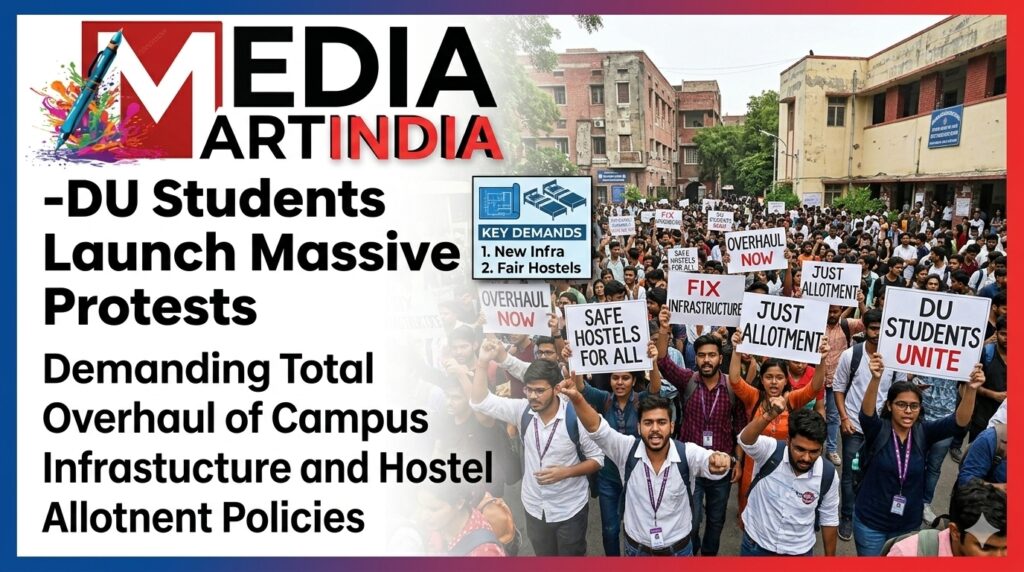
Frustrated by years of what they term “administrative neglect,” students have laid out a comprehensive list of demands aimed at improving daily life across various campuses and hostels, threatening indefinite agitation if their grievances are not met. At the forefront of the students’ charter of demands is a complete restructuring of the accommodation system. Currently, the hostel admission process is staggered, causing immense financial strain on outstation students who are forced to seek expensive private accommodation while waiting for lists to be published. The student body is demanding that Delhi University allot hostels to all students in one go at the beginning of the academic session to ensure transparency and reduce anxiety. Furthermore, protestors are calling for the strict implementation of constitutionally mandated reservation policies in all hostel allotments. Student representatives argue that marginalized communities are disproportionately left out of campus housing due to systemic loopholes, and a formalized reservation system within the hostel framework is non-negotiable to ensure equity.

The physical state of Delhi University’s residential spaces has become a major flashpoint. Activists have demanded that the administration renovate all dormitories and hostels as soon as possible. Reports of peeling plaster, leaking roofs, and outdated sanitation facilities have surfaced across multiple residential complexes, prompting safety concerns. The infrastructure crisis extends beyond the bedroom walls and onto the campus roads. Students have highlighted severe civic negligence, demanding an immediate end to the chronic waterlogging issue on the road behind Mughal Darbar. This particular stretch becomes completely impassable during the monsoon season, creating a health hazard and cutting off vital campus routes. Additionally, there is an urgent call to repair the road leading towards Damodar Hostel, which is currently riddled with potholes and lacks adequate street lighting, posing a severe safety risk to students commuting at night. The sit-in protests have also turned the spotlight on newer residential facilities that remain underutilized or poorly managed. A primary demand is to immediately open the mess and enable high-speed Wi-Fi in Barak Hostel. Residents of Barak Hostel have reportedly been forced to source food from outside vendors and suffer without internet access, severely hindering their academic pursuits.
Mobility within multi-storey hostel buildings has also triggered widespread outrage. Students are demanding that the administration make all lifts functional and guarantee 24/7 access to them. Currently, several lifts remain broken for weeks, and those that work are often locked after evening hours, creating immense hardship for students, particularly those with disabilities or health conditions. In a bid to tackle alleged financial opacity, the student movement is pushing for structural governance reforms. They are demanding that the university democratise the hostel development and maintenance fund by shifting control away from absolute bureaucratic custody. Crucially, students want the university to include the elected hostel committee in the Fund Use Committee. Activists argue that because students are the primary stakeholders, their elected representatives must have a direct vote on how development funds are prioritised and spent. The charter also addresses the rights of the campus workforce. In solidarity with non-teaching staff, students have demanded that the university stop the retrenchment of mess staff. Recent administrative moves to downsize kitchen staff have led to fears of privatization and deteriorated food quality.
Students argue that protecting workers’ jobs is directly linked to maintaining the quality of campus life. Simultaneously, the demand to renovate the university stadium and recruit new sports staff has gained momentum. Once a hub for national-level athletes, the stadium has reportedly fallen into disrepair, suffering from a lack of proper equipment and a severe shortage of coaches and groundskeepers. Finally, the students are calling for a revitalization of the university’s iconic social and culinary spaces. A loud cry has gone up to renovate Teflas now, restoring the historic student hub to its former glory. Alongside physical renovations, there is a push to overhaul the campus food economy. Students are urging the administration to adopt a progressive policy for the allotment of canteens and regularise food prices. The student body argues that campus canteens should not be commercialised for profit, and price caps must be enforced to ensure every student has access to affordable, nutritious meals. As tensions rise, the university administration has stated they are reviewing the charter, but students maintain they will not back down until concrete deadlines for these reforms are officially issued.