



World Environment Day is a reminder that climate action must be practical, collaborative and grounded in evidence.
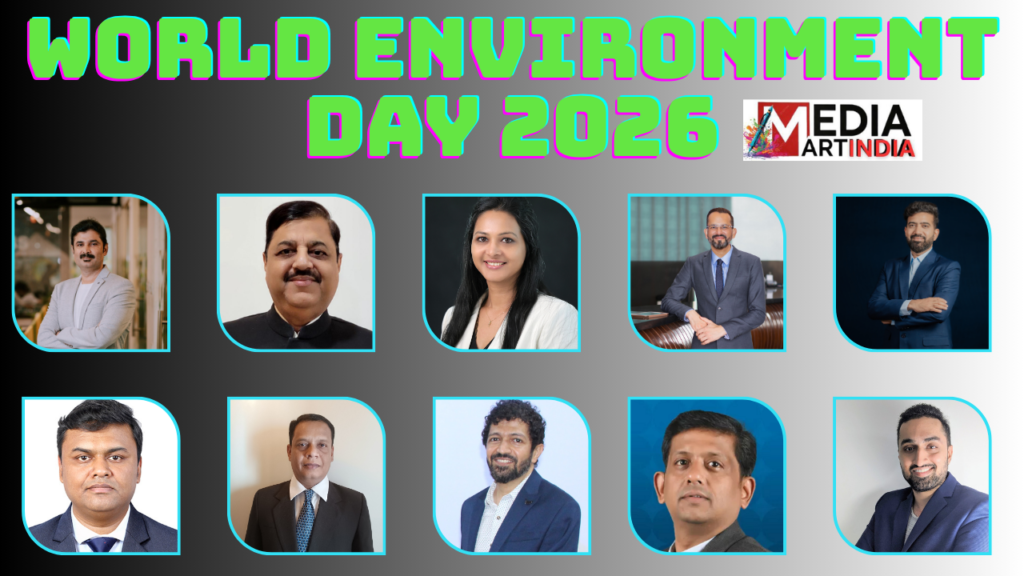
Amit Bajoria, Chief Financial Officer, Virtusa Corporation: “The future of economic growth, technological progress, and environmental sustainability are becoming deeply interconnected as industries continue to evolve through AI, digital infrastructure, and large-scale innovation. As World Environment Day 2026 draws attention to the importance of building a more sustainable future, resilient systems, thoughtful resource utilization, and long-term sustainability will continue to play an important role in shaping future-ready enterprises and economies. Creating progress that remains sustainable over time will require organizations to balance innovation with responsibility and contribute toward more resilient ecosystems for generations ahead.”

Vasudeva G, Director, Acerpure India: “World Environment Day is a timely reminder that sustainability is not defined by a single action, but by the collective impact of the choices we make every day. From how we consume resources to the technologies and solutions we embrace, each decision plays a role in shaping a more sustainable future. This year’s theme, ‘Inspired by Nature. For Climate. For Our Future.’, highlights the important lessons nature offers in building resilience, balance, and long-term sustainability. It underscores the need for individuals, communities, and businesses to work together in addressing climate challenges while fostering responsible growth and innovation. As we mark World Environment Day 2026, there is an opportunity to translate awareness into action by adopting more conscious practices that support environmental well-being, strengthen climate resilience, and help create a healthier future for generations to come.”
Narendra Sen, Founder & CEO, RackBank and NeevCloud: “Nature has always been the most efficient engineer. It cools, conserves, and regenerates without waste. As India scales its AI ambitions, the industry must ensure that technological progress does not come at the expense of the environment. The AI revolution requires immense computing power, making it imperative for data centres and digital infrastructure providers to adopt sustainable solutions such as liquid cooling and clean energy. At RackBank, we believe innovation and sustainability must go hand in hand. Through technologies like our Varuna Immersion Cooling system, we are demonstrating how high-performance AI infrastructure can significantly reduce energy consumption, water usage, and carbon emissions while supporting the growing demands of AI workloads. This World Environment Day, the focus should not just be on reducing our footprint, but on reimagining how we build. Sustainability must be embedded into every decision, ensuring that India’s digital future is both technologically advanced and environmentally responsible.”
Jaideep Roy, Director, Business Development, IMS, Vertiv: “The digital infrastructure powering our world today is responsible for a significant and growing share of global energy consumption. That is a reality we at Vertiv take seriously, not just as a footnote, but as a defining challenge for our industry. On this World Environment Day, we renew our commitment to designing infrastructure that does more with less by reducing thermal waste, improving power efficiency and partnering with customers to meet their net-zero ambitions. The planet cannot wait for perfect solutions. Progress, made urgently and on a scale, is what the moment demands.”
Nikhil Parate, Head of Energy and Sustainability, Colt DCS India: “India is at a defining inflection point. We are building the digital infrastructure that will power the next decade of economic growth, and the decisions we make today about how we design, build, and operate data centres will echo for decades. Mumbai alone already accounts for more than half of India’s data centre capacity, with total committed capacity across the country heading toward 3GW. That scale brings responsibility. At Colt DCS, we believe sustainable design is the credible path to ambition. From liquid cooling and renewable energy procurement to water efficiency in a physically demanding climate, every infrastructure choice is also an environmental one. On World Environment Day, we confirm that India’s digital and sustainable ambitions are not in competition, they are one and the same.”
Sachin Panicker, Chief AI Officer, Fulcrum Digital:”India is at a defining inflection point. Data centres already consumed 0.5% of India’s electricity in 2025, and that figure is projected to more than double by 2030 – powered largely by an AI boom that shows no signs of slowing. The challenge is acute because over 70% of India’s grid still runs on coal, meaning every AI workload we run today carries a real carbon cost. This is not a future problem – it is today’s responsibility. At Fulcrum Digital, we believe the answer lies in building AI that is efficient and sustainable by design – through leaner models, smarter inference, and conscious architecture choices. India has the ambition to lead in AI. The question is whether we will lead responsibly.”
Dr. Irfan Khan, Founder, EBG Group : World Environment Day is a reminder that sustainability is no longer a choice; it is a shared responsibility that must guide every decision we make. At EBG Group, our philosophy of ‘People. Planet. Progress.’ reflects our belief that economic growth and environmental care must advance together. Through the EBG Foundation’s ‘Sambhav Hai’ initiative, we have embarked on a mission to help build climate-conscious and carbon-neutral villages across India, beginning with 50 villages in the first phase. The programme aims to reduce village carbon footprints through afforestation, water conservation, waste management, regenerative agriculture, and community-led sustainability practices. Our goal is simple: to demonstrate that climate action, economic progress, and inclusive community development can coexist and thrive together. The future of sustainability will be defined by measurable action on the ground.
Suresh Goyal, Director, EBG Foundation: Climate action can’t be confined to policy discussions and boardrooms; it is time to translate it into measurable change at the grassroots level. With ‘Sambhav Hai’, EBG Foundation is creating a practical and scalable rural sustainability model that empowers communities to become active participants in India’s environmental future. Our focus is to reduce carbon footprints, strengthen water security, improve waste management practices, encourage regenerative agriculture, and build long-term environmental resilience in villages.
Ms. Smitha Shetty, Director – Centralised Global Operations, Achilles Information Limited : “Nature has always shown us the value of balance, resilience and renewal. As businesses respond to the realities of climate change, these principles offer a valuable lens for how they manage resources, build resilience and engage with the wider value chain. This year’s theme, ‘Inspired by Nature. For Climate. For Our Future.’, resonates with the work we do at Achilles. Climate risk and supply chain risk are no longer separate conversations. The choices an organisation makes about its suppliers, sourcing practices and the data it relies on will shape both its climate performance and long-term resilience. Progress depends on visibility, credible data and honest collaboration with suppliers, partners and the communities in which they operate. There is something valuable to take from nature here. Every part of a system is connected, and resilience comes from understanding and strengthening those connections. Supply chains are no different. The organisations best prepared for what lies ahead will be those willing to look carefully at their own operations, ask harder questions of their suppliers and act on what they find.
Kartik Daftari, Managing Director & CEO at Hi-Tech Radiators Pvt. Ltd: “The Indian manufacturing sector is experiencing a shift where environmental performance is influencing competitiveness, customer preference and long-term business resilience. Manufacturing along with energy and transportation sectors are the largest contributors to global emissions, making industrial decarbonisation essential to achieve climate goals. The path forward for heavy engineering and manufacturing companies is to maximise renewable energy adoption, enhance energy efficiency, reduce transportation emissions and infuse real-time environmental monitoring into operations. At Hi-Tech, we are translating this commitment into action. Today, 55% of our power is met through renewable energy and we continue to expand this share while promoting manufacturing consolidation and automation-led efficiencies. We are aiming for a substantial decrease in carbon emissions throughout our operations by targeting the two biggest sources of our carbon footprint i.e. power consumption and logistics. Our goal is to establish a globally competitive thermal management business that demonstrates how responsible manufacturing and sustainable growth can advance together.”