



Sujeet Kumar
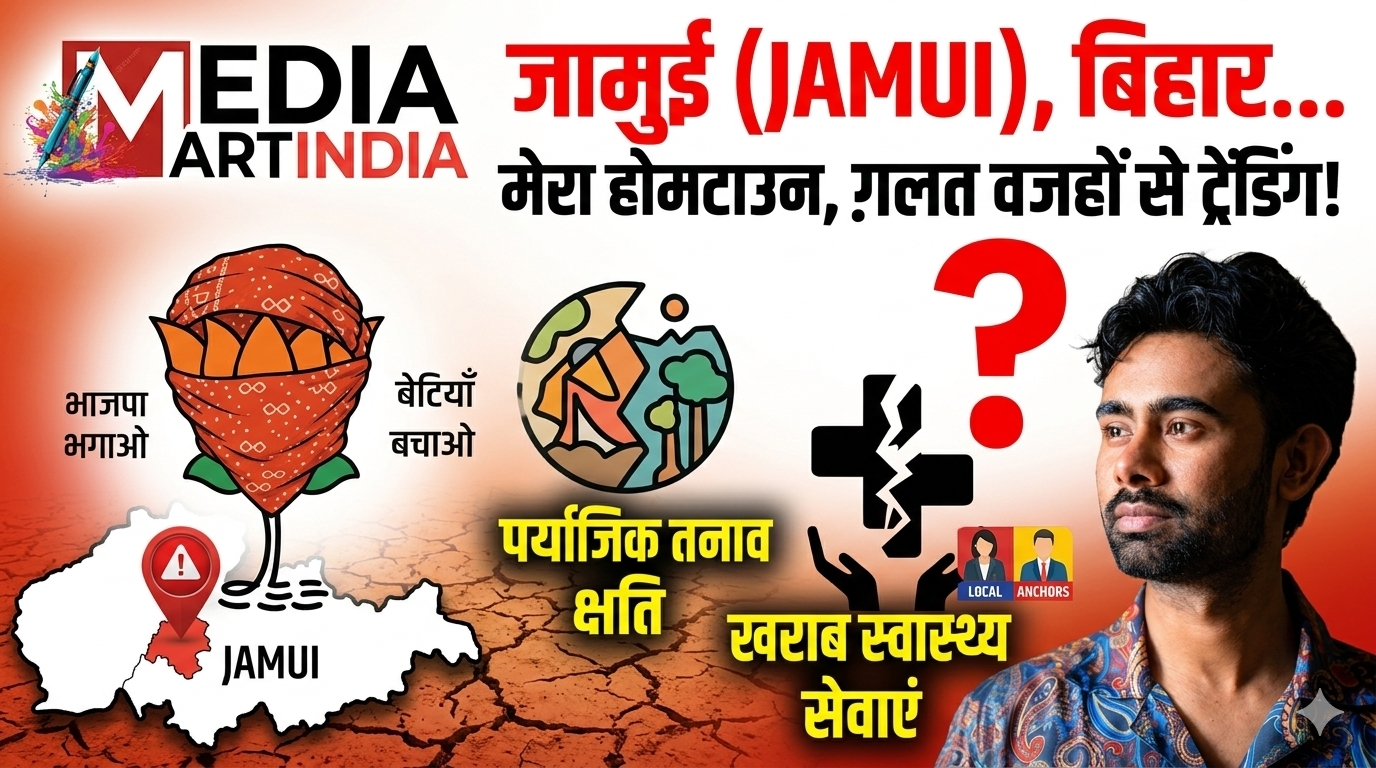
My Hometown Is Trending for the Wrong Reasons, The assault on two schoolchildren is not an isolated crime. It is the end point of a culture that all of us families, schools, society, the state have quietly watered. I grew up in Jamui. Green hills, small-town evenings, my first school. Some of my warmest memories live there. This week, my hometown is in the news for the ugliest of reasons: two schoolchildren, out on a scooter ride after tuition, allegedly surrounded by a group of young men, assaulted and molested an ordeal filmed on a phone and passed around like entertainment. The country is asking how this could happen. I find myself asking a different question: where does a crime actually begin? Not on that hillside. It begins years earlier; in places we call normal.

The making of a “don”
In my own school in Jamui decades ago, boys proudly carried titles borrowed from local goons “Singhania” was a favourite. Power meant caste and muscle; dominating a physically weaker classmate was not called bullying. It was called being a leader. That was then. Recently, scrolling Instagram, I found schoolchildren with “Mafia Don” written in their usernames with pride, with style. From “Singhania” in the playground to “Mafia Don” in a 14-year-old’s bio, the fantasy has not died. It has merely upgraded now with followers, likes and an algorithm applauding along. I have heard young men say, without a flicker of shame: “I spent five months in jail. Next time it will be a year and I will be out.” When prison becomes a credential and film songs turn goons into heroes, we are no longer looking at individual wickedness. We are looking at a culture that manufactures it.

This culture is not abstract. In two years of visits home, it found me twice. A young man pulled at my shirt while I was riding; the shirt tore, I nearly lost my balance, and his farewell was a raised middle finger. On another night, a man picked a fight with me for wearing a mask to protect others and did not stop till my stop, waving his connections: “I know this leader. He is my son-in-law.” That one line is the entire story of impunity: inherited from politics, worn like a license.
We watered him
When we ask “How could they do this?”, the sharper question is: what made them believe they could get away with it? The honest answer stings, because the answer is us. Every song hummed without hearing the lyrics. Every strongman joke laughed at. Every silence at the dinner table. Every reel forwarded with a grin. No goon grows alone; we water him. And because respect, consent and power are subjects we whisper about or avoid entirely, the taboo is precisely where the rot hides. Nor is this Jamui’s burden alone. Travel to any village or mohalla of Bihar and you will find a Bahubali loud with pride, often beloved. Jamui is not the monster; Jamui is the mirror. The crack runs through the state through homes, songs, politics and courtrooms.
I write about Bihar not because it is worse than other states, but because it is mine. My grandmother lives there; my memories do. Bihar is my business, and its healing is my responsibility. The cure is quieter than the outrage The arrests are necessary. They are also only treatment. The cure is slower and less cinematic.
It begins with individuals refusing to hum the song, share the reel, or stay silent at the family table. With families raising sons to understand that protecting someone is strength and frightening someone is not. With schools treating sensitization on consent and respect as seriously as mathematics. With civil society organizations mentoring boys where homes and schools fall short. And with a justice system that convicts because “out in five months” is a promise our courts keep making to criminals, and a promise they keep cashing.
Public figures must choose too. After every such incident, they compete to announce that “a precedent will be set.” The precedent that matters is the one set before the incident in what they celebrate, whom they patronize, and what they refuse to glorify. I love Jamui too much to reduce it to a headline, and Bihar too much to pretend this is someone else’s problem. I want our children to ride to the hills at sunset, photograph the sky, and return home thinking of homework, not fear. When the children of Bihar go looking for names to call themselves, what will they find in our homes, our songs, our streets? A don to imitate or a good human to become? (The writer grew up in Jamui, Bihar. Views expressed are personal.)